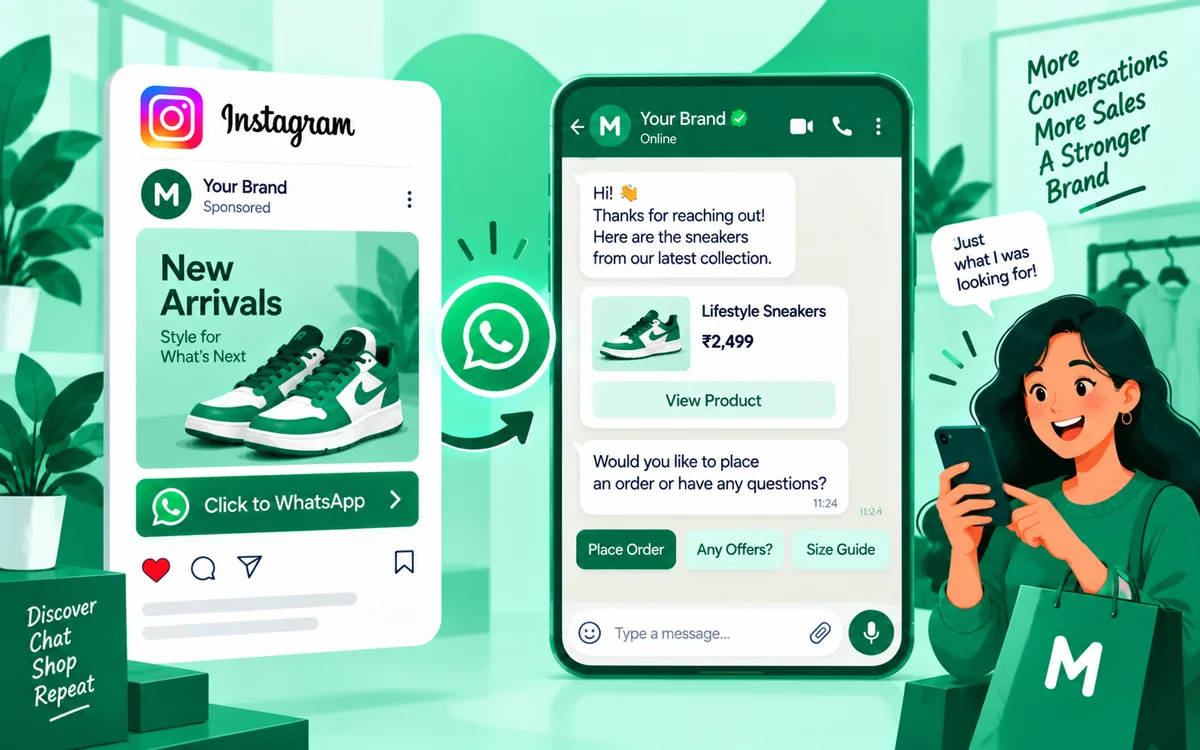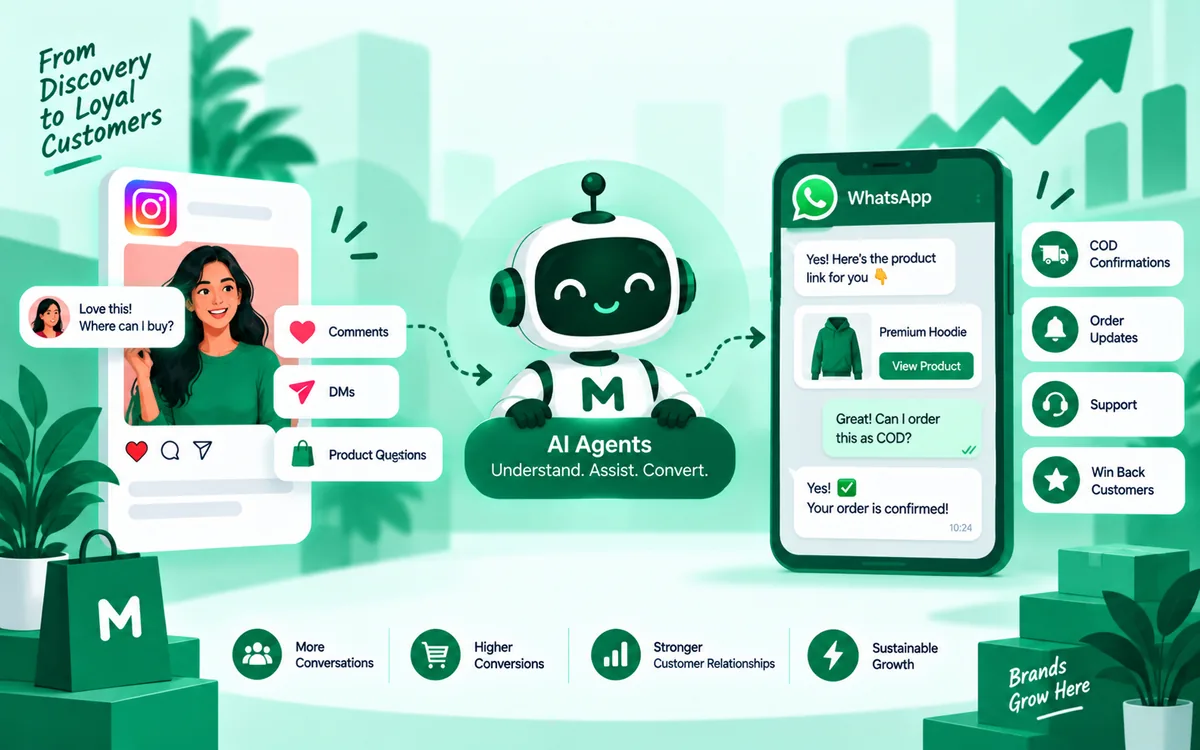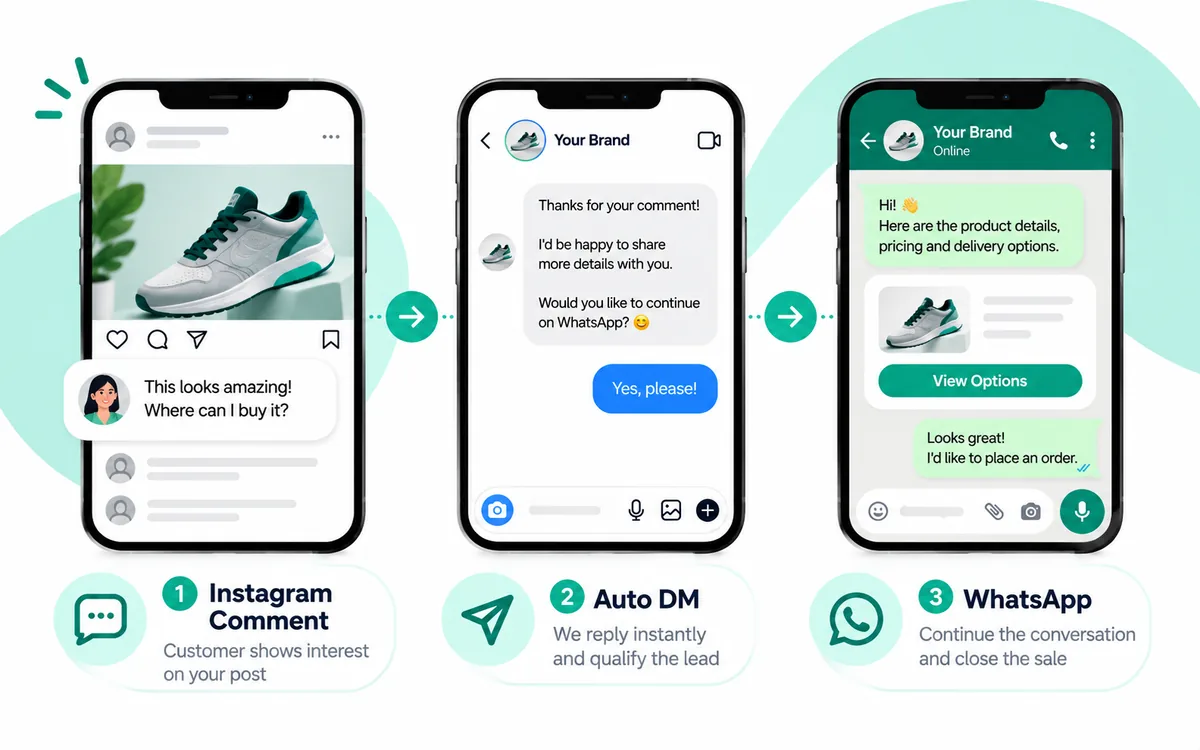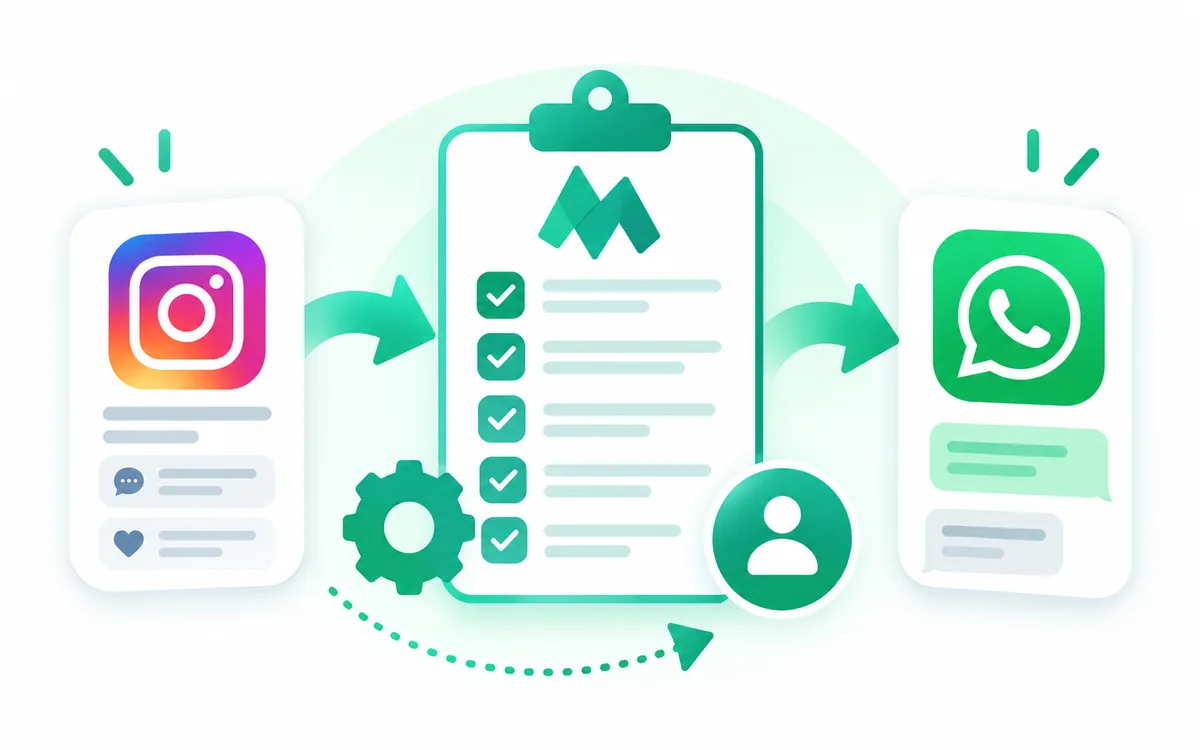



Shopify WhatsApp integration turns WhatsApp from a manual support channel into a connected commerce channel. Instead of letting a shopper disappear after abandoning checkout, waiting for an email to be noticed, or asking agents to manually confirm every order, your Shopify store can connect commerce events with WhatsApp workflows.
The important distinction is that a good integration is not simply a button that says “Connect WhatsApp.” It has to solve the operational problems behind messaging: customer consent, approved templates, reliable Shopify events, valid recovery links, order updates, agent handoffs, security and measurable revenue impact.
The Short Answer: How to Connect WhatsApp to Shopify
To connect WhatsApp to Shopify, you can use Shopify's supported WhatsApp functionality, a Shopify WhatsApp app, or a WhatsApp Business Platform/BSP solution. Connect your WhatsApp Business Account, configure the phone number and business details, enable the appropriate WhatsApp opt-in, create approved message templates, connect Shopify events through webhooks or an app integration, and test the complete customer journey before launching.
For a simple store, Shopify's native capabilities or a focused app may be enough. For advanced abandoned-cart journeys, automation, shared inboxes, segmentation and AI-assisted conversations, a dedicated WhatsApp platform can sit between Shopify and the WhatsApp Business Platform.

Why Shopify Merchants Need WhatsApp Integration
Most stores do not have a messaging problem. They have a customer-journey gap.
A shopper adds products to a cart but leaves. An order is placed but the confirmation email is missed. A delivery status changes but the customer checks manually. A COD order needs confirmation. A customer replies to an automated message and suddenly three agents are trying to answer from different places.
WhatsApp can help close these gaps, but only when it is connected to the underlying Shopify events and customer permissions.
- Abandoned carts: recovery messages can bring eligible shoppers back to a relevant checkout experience.
- Order updates: customers can receive useful confirmations and fulfillment information.
- Support: replies can enter a shared inbox instead of remaining tied to one employee's phone.
- COD workflows: merchants in markets such as India can optionally build confirmation journeys around COD orders, subject to consent and applicable requirements.
- Lifecycle marketing: opted-in customers can receive relevant marketing journeys rather than disconnected broadcasts.
Does Shopify Have WhatsApp Integration?
Yes. Shopify currently documents WhatsApp functionality through Shopify Messaging, including connecting a WhatsApp Business Account and collecting WhatsApp marketing consent at checkout. Shopify also provides documentation for switching from another provider and connecting a new or existing WhatsApp Business Account. See Shopify's WhatsApp setup documentation.
That does not mean every Shopify store automatically has a complete WhatsApp automation stack. A merchant may need an app or BSP/platform when the requirements extend to advanced event-driven automation, abandoned checkout journeys, multi-agent support, analytics, routing or AI.
Shopify WhatsApp App vs Direct WhatsApp Business Platform
The phrase shopify whatsapp app can describe several different products. Some apps focus on simple notifications or click-to-chat functionality. Others connect Shopify data with the WhatsApp Business Platform and provide templates, automation and inbox capabilities.
A direct or BSP-based integration gives you more control over the architecture, while an app can reduce implementation work. The right choice depends on whether your priority is simplicity or a broader customer-engagement system.
| Requirement | Basic Shopify WhatsApp App | WhatsApp Platform/BSP |
|---|---|---|
| Click-to-chat | Often | Yes |
| Order notifications | Often | Yes |
| Advanced Shopify event automation | Depends on app | Yes |
| Abandoned-cart journeys | Depends on app | Yes |
| Shared multi-agent inbox | Depends on app | Common capability |
| Custom workflows and integrations | Limited by app | More flexible |
WhatsApp Business App vs WhatsApp Business Platform
The WhatsApp Business app is primarily intended for businesses managing conversations through the application. The WhatsApp Business Platform provides the programmatic layer used by software and commerce integrations.
If your requirement is “when a Shopify order is fulfilled, automatically send an approved WhatsApp notification,” you need an integration capable of calling the WhatsApp Business Platform. A manual business app alone does not create that Shopify event-driven architecture.
Meta's current requirements, including business messaging, customer permissions and template rules, should always be checked against the WhatsApp Business Messaging Policy.
Shopify WhatsApp Integration Architecture
A useful mental model is:
WhatsApp Business Account (WABA) → WhatsApp Cloud API or BSP → Shopify app/API/webhooks → automation and consent layer → templates → customer → shared inbox.
The WABA represents the business identity and WhatsApp configuration. The Cloud API or BSP layer handles messaging connectivity. Shopify supplies commerce data and events. Your integration decides whether an event is eligible for a message, which template should be used and what should happen when the customer replies.

How to Set Up WhatsApp on Shopify
1. Define the customer journeys
Start with the outcomes you need. Typical journeys include order confirmation, payment confirmation, shipment tracking, cancellation, abandoned checkout, customer support and marketing.
Do not start by creating dozens of templates. First decide which Shopify event should trigger each journey and what the customer should be able to do next.
2. Prepare Meta and WhatsApp
Shopify's setup documentation requires business information, Meta Business credentials and a WhatsApp phone number. Shopify supports creating a new WhatsApp Business Account through Meta's embedded signup flow or connecting an existing account, subject to its connection requirements.
If your WABA is already connected to another provider, check the migration or switching requirements before disconnecting anything. Your phone number and business identity can be operationally important assets.
3. Complete verification where appropriate
Meta business verification is managed through Meta Business rather than simply inside Shopify. Shopify states that verification can help with template review and messaging-limit progression. Verification requirements and review decisions are controlled by Meta, so do not promise customers or internal teams a specific approval time.
4. Configure WhatsApp opt-in
Consent is not optional architecture. A phone number tells you how to contact someone; it does not automatically mean that the person has agreed to receive WhatsApp marketing.
Shopify documents a WhatsApp marketing opt-in that can be displayed during checkout. Shopify also allows merchants to configure regions where WhatsApp marketing opt-in is shown instead of SMS. See Shopify's checkout form options.

Checkout to WhatsApp Consent Flow
A practical flow is:
Product → Cart → Checkout → Phone number → WhatsApp opt-in → Consent recorded → Eligibility check → Approved message → WhatsApp → Customer reply or click.
Keep marketing consent separate from transactional eligibility in your data model. A store may have a customer's phone number for order fulfillment while the customer has not opted into marketing. Your automation should know the difference.
Also provide a clear opt-out mechanism and make sure your suppression logic prevents future marketing messages after an opt-out.
WhatsApp Templates: Utility, Marketing and Authentication
WhatsApp Platform messaging uses message templates for applicable business-initiated conversations. The exact template categories and Meta rules can change, so merchants should check the current Meta documentation before launching.
In practical terms, merchants commonly separate workflows into utility-style operational messages, marketing messages and authentication-related messages where supported.
Examples include order confirmation, shipping updates, promotional campaigns and authentication codes. Do not use a transactional event as an excuse to insert unrelated promotional content into every message. Keep the message purpose aligned with the customer journey and applicable Meta requirements.
Understanding the 24-Hour Customer-Service Window
One of the most important WhatsApp concepts is the customer-service window. When a customer messages a business, the business can generally respond within the applicable 24-hour customer-service window without using a template. Outside that window, business-initiated messaging uses approved templates under Meta's rules.
This distinction changes how support automation should be designed. A customer asking “Where is my order?” can enter a conversational support workflow, while a proactive campaign sent later may require a template and appropriate marketing consent.
Always confirm the current rules in Meta's WhatsApp Business Messaging Policy and current developer documentation before implementation.
How to Send Shopify Order Updates on WhatsApp
The core pattern is simple:
Shopify event → webhook/app handler → current order data → consent and eligibility check → template selection → WhatsApp API → delivery status → analytics.
For example, when an order is created, the integration can receive the Shopify event, retrieve the information required for the message, select the appropriate template and send the notification. When fulfillment changes, a separate workflow can send shipping or tracking information.
Shopify documents webhooks as a near-real-time mechanism for receiving shop events and specifically describes them as a performant alternative to continuously polling Shopify. See Shopify's webhook documentation.
Shopify Webhook Map for WhatsApp Automation

A conceptual webhook map can look like this:
orders/create→ order-confirmation workflow.orders/paidor relevant payment event → payment workflow where supported by the integration.orders/fulfilled→ shipping and tracking workflow.orders/cancelled→ cancellation workflow.- Relevant customer or checkout events → recovery and lifecycle automation.
- Inbound WhatsApp message → conversation router → bot or human agent.
Shopify does not guarantee webhook ordering, so production integrations should verify HMAC signatures, deduplicate deliveries and process events safely. Shopify recommends acknowledging webhook requests quickly and moving long-running work out of the request path. See Shopify webhooks.
Abandoned Cart Recovery Through WhatsApp
Abandoned-cart recovery is where poor integrations become obvious. A message can be delivered perfectly and still fail because the shopper has already purchased, the link is invalid or the customer was not eligible for the message.
- Detect the abandoned checkout or supported commerce event.
- Check the customer's WhatsApp eligibility and consent.
- Wait for the configured recovery delay.
- Check whether the checkout has already converted.
- Generate or retrieve the correct recovery URL.
- Validate the destination and parameters.
- Send the appropriate approved template.
- Stop subsequent reminders after conversion or opt-out.
- Attribute clicks and resulting orders to the journey.
The KPI is not “messages sent.” The useful business measurement is the complete path from eligible customer to click to recovered purchase.

WhatsApp Product Catalog and Shopify Products
Product discovery is another area where Shopify and WhatsApp can complement each other. A merchant can use Shopify as the commerce source while a WhatsApp experience helps customers discover products, ask questions and continue toward purchase.
Do not assume that synchronizing every Shopify product automatically creates a perfect WhatsApp catalog. Product titles, prices, availability, variants, images and policy requirements need to be kept consistent with the actual commerce experience.
For stores with frequently changing inventory, treat product synchronization as an operational process with monitoring rather than a one-time import.
Multi-Agent WhatsApp Support for Shopify
Once WhatsApp becomes a serious support channel, one shared phone is not enough. Teams need conversation ownership.
- Agent assignment and routing
- Conversation history
- Internal notes
- Customer tags and order context
- Bot-to-human handoff
- Response-time monitoring
- Opt-out and suppression handling
- Auditability for important actions
A good setup lets automation handle predictable questions while transferring complex cases to the right person. This reduces the risk of two agents answering the same customer or a customer being asked for order information that the system already has.
Shopify WhatsApp Pricing: What to Budget For
There is no single universal “WhatsApp Shopify integration price.” Your total cost can contain several layers: Shopify subscription and app costs, WhatsApp messaging charges determined by Meta's current commercial model and market, BSP or platform fees where applicable, and implementation or support costs.
Avoid publishing a supposedly universal per-message price without checking the current Meta pricing documentation for the destination market and message type. Pricing models and commercial terms can change.
For budgeting, separate software subscription, WhatsApp messaging spend, implementation and support. Then compare the cost with measurable outcomes such as recovered orders, support efficiency and customer retention.
Global Shopify WhatsApp Considerations
A global store should not assume that one messaging workflow fits every market. US, UK, Canada, Australia and European markets can have different privacy, marketing-consent and consumer-protection requirements. Germany and other EU markets deserve particular attention to privacy and direct-marketing compliance.
For India-focused stores, WhatsApp can be especially useful for COD confirmation and delivery communication, but COD status does not remove the need for appropriate WhatsApp consent or applicable legal compliance.
Use this article as an integration framework, not as legal advice. Your privacy, marketing and consent practices should be reviewed for every market in which you operate.
Security and Privacy Checklist

- Use HTTPS webhook endpoints.
- Verify Shopify webhook HMAC signatures.
- Keep API credentials and access tokens server-side.
- Use least-privilege Shopify permissions.
- Encrypt sensitive credentials at rest.
- Record consent and opt-out status accurately.
- Minimize unnecessary customer-data retention.
- Restrict access to customer conversations.
- Define deletion and retention procedures.
- Maintain appropriate privacy notices for your markets.
Shopify WhatsApp Troubleshooting
WhatsApp messages are not sending
Check the WABA, phone number, template status, consent, eligibility and API response. A successful Shopify event does not automatically mean that WhatsApp is authorized to message the customer.
The template is approved but delivery fails
Check the exact template name, language, variables, account status and recipient eligibility. Log the provider response so failures can be diagnosed instead of silently retried.
The abandoned-cart link is broken
Log the final URL generated for the message and test it on mobile. Validate URL encoding and checkout state. Avoid having separate teams generate recovery URLs with different rules.
Customers receive duplicate messages
Check webhook deduplication. Shopify documents X-Shopify-Webhook-Id for identifying deliveries and recommends ignoring duplicate deliveries. Process long-running automation asynchronously.
WhatsApp opt-in is missing from checkout
Review Shopify's checkout settings, regional configuration and the current WhatsApp marketing setup. Shopify documents that WhatsApp can be configured as a marketing opt-in option at checkout.
The number is already connected elsewhere
Review the current provider connection before attempting migration. Shopify's WhatsApp setup documentation specifically addresses switching from another provider and associated requirements.
KPIs for Shopify WhatsApp Integration
Measure the commerce outcome, not just messaging activity.
| KPI | Why it matters |
|---|---|
| Eligible contacts | Shows the reachable audience under your consent rules. |
| Send and delivery rate | Shows technical reliability. |
| Read or engagement rate | Shows whether customers interact with messages. |
| Click rate | Shows whether the message drives action. |
| Recovered orders | Measures abandoned-checkout impact. |
| Attributed revenue | Connects messaging to commerce outcomes. |
| Opt-out rate | Highlights potential relevance or consent problems. |
| First-response and resolution time | Measures support performance. |
Testing Before Launch
Test the whole journey, not just a “send test message” button.
- Opted-in and non-opted-in customers
- Order creation and payment
- Fulfillment and tracking
- Cancellation
- Abandoned checkout
- Expired or invalid recovery links
- Duplicate webhook delivery
- Customer reply inside and outside the applicable service window
- Bot-to-agent escalation
- Multiple agents handling one conversation
- International phone numbers and currencies
- Template variables with long product names and unusual characters
Where Mark360.ai Fits

For merchants that need more than basic WhatsApp notifications, Mark360.ai can fit as a WhatsApp BSP/platform layer for Shopify customer engagement. The useful starting point is not a feature checklist; it is the journey you want to improve: abandoned checkout recovery, order notifications, customer support, automated conversations or marketing to appropriately opted-in customers.
The platform approach can bring Shopify events, WhatsApp templates, automation, customer conversations and agent workflows into one operating layer. Your business still controls the customer experience, consent policy and commercial strategy.
If you are evaluating how to add WhatsApp to Shopify, start by mapping your highest-value customer journeys and then choose the simplest architecture that can reliably execute them.
Shopify WhatsApp Integration FAQs
How do I connect WhatsApp to Shopify?
Use Shopify's WhatsApp functionality, a Shopify WhatsApp app or a WhatsApp Business Platform/BSP solution. Connect your WABA, configure the phone number, consent and templates, connect Shopify events and test the workflows.
Does Shopify have WhatsApp integration?
Yes. Shopify provides WhatsApp functionality through Shopify Messaging, including WhatsApp Business Account connection and marketing opt-in configuration.
What is the difference between WhatsApp Business API and the WhatsApp Business app?
The Business app is primarily for manual business conversations. The WhatsApp Business Platform/API provides the programmatic foundation for automated messaging and software integrations.
How do I send Shopify order updates on WhatsApp?
Connect the relevant Shopify event to an integration, check customer eligibility and consent, select the appropriate approved template and send it through the WhatsApp Business Platform.
Can I send abandoned-cart messages through WhatsApp?
Yes, provided the customer is eligible and the workflow correctly handles consent, timing, template requirements, checkout state and recovery links.
Do customers automatically consent to WhatsApp marketing when they enter their phone number?
No. Shopify distinguishes the phone number from WhatsApp marketing opt-in. Configure and store the appropriate consent status before sending marketing journeys.
Can multiple agents manage one Shopify WhatsApp number?
Yes, with a suitable shared inbox or platform. Look for assignment, routing, history, order context, escalation and duplicate-response controls.
What does Shopify WhatsApp integration cost?
Costs depend on Shopify software, app or BSP fees, implementation and current Meta messaging charges. There is no single universal price; check current commercial terms before budgeting.
Key Takeaways
- Shopify WhatsApp integration is a customer-journey system, not merely a messaging button.
- Choose between Shopify functionality, a Shopify app and a BSP/platform based on the automation and support complexity you actually need.
- Keep phone-number collection and WhatsApp marketing consent separate.
- Use Shopify webhooks and idempotent processing for reliable event-driven workflows.
- Use approved templates for applicable business-initiated Platform messaging.
- Validate abandoned-checkout links and stop recovery journeys after conversion or opt-out.
- Measure recovered orders, attributed revenue and support outcomes alongside delivery metrics.